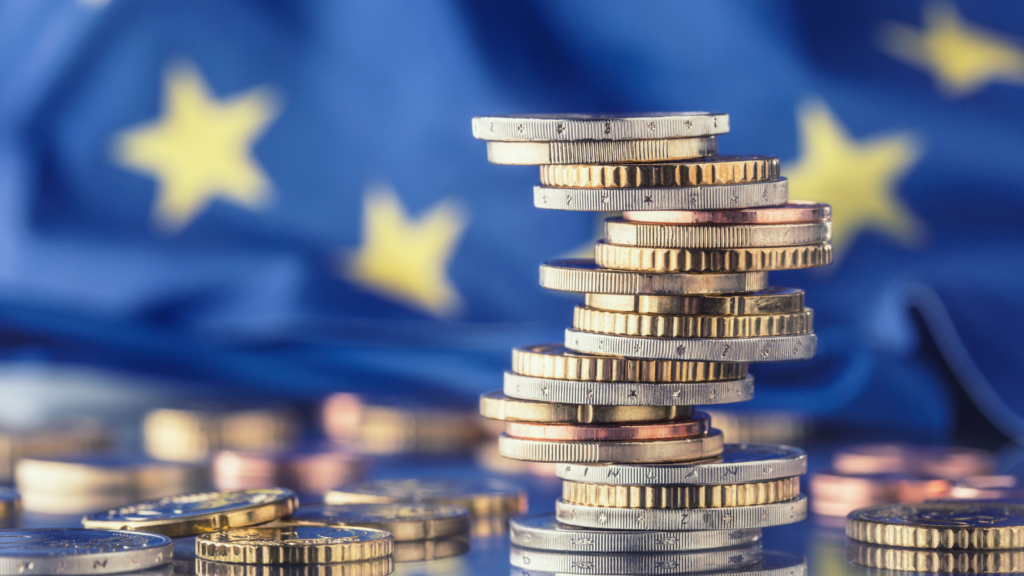
European Economic Integration

Module overview

This course provides an in-depth understanding of European economic integration — one of the most consequential experiments in regional cooperation in modern history. From the early post-war architecture to today’s single market debates, participants will gain both historical grounding and analytical tools to assess the EU’s economic trajectory.

It presents the evolution of European economic integration across four thematic sessions, tracing the path from initial institutional confusion and sectoral experiments to the Delors-era single market breakthrough, and onwards to the contemporary tensions between deeper integration and persistent fragmentation.

Module objectives

By the end of this module, participants will be able to:

  • Explain the origins and logic of European economic integration versus simple intergovernmental cooperation.
  • Trace the development and shortcomings of the EEC’s common market through its various phases.
  • Analyse the Delors revival and the EC-1992 programme as a turning point in integration depth.
  • Critically assess the current Janus-faced reality of EU economic integration: deeper in some respects, yet still fragmented and challenged in others.

Module programme

28 September 2026

09:30 - 11:30

Pl. du Congrès 1, Bruxelles

Initial confusing blend of institutional initiatives — the Council of Europe, narrow but ambitious sectoral integration in coal and steel, and a rejected defence community — alongside the sad economic reality of the ECSC. The session covers the serious ‘relance européenne’ (and the loss of the UK), the EEC versus EFTA rivalry, and the essence of the EEC Treaty (flow charts). The core principle of the EEC: rules, not money.

Further topics include: the French mega-risk and Rueff’s solution; the customs union; the transition period 1958–1970 (mainly goods, little else); and the external dimension — trade and the GATT.

Taught by:

Jacques Pelkmans

Associate Senior Research Fellow

29 September 2026

09:30 - 11:30

Pl. du Congrès 1, Bruxelles

Ever deeper frustrations inside a not-so-common market: goods regulation and the true scope (or absence) of the free movements; services entirely absent, including six modes of transport; other services ignored; minimal labour mobility; capital movements restricted under Articles 108/9; IPRs ignore.ed or denied; and a divisive trade policy for member states.

Additional obstacles examined: the absence of European technical standards underpinning EU rules; goods rules working in principle but legislation subject to vetoes and ‘eurosclerosis’; the absence of stable exchange rates ripping the CAP apart; and the uncritical fantasy around EMU — the Werner Report and EMU as a phantom.

Taught by:

Jacques Pelkmans

Associate Senior Research Fellow

30 September 2026

09:30 - 11:30

Pl. du Congrès 1, Bruxelles

How EC-1992 was pre-cooked – in customs, in technical standards, in transport – by the European Parliament and by Albert/Ball and Commissioner Karl-Heinz Narjes. The session examines QMV and the Single Act; the ‘spiralling up’ of EC-1992 (with help from the troika, Cecchini, and QMV); the abolition of exchange controls; the clean-up of EU trade policy; and the introduction of cohesion policy.

The Maastricht Treaty (flow chart) is also covered – what was added and amended, including the common currency – along with the economic attraction EC-1992 created for non-EU companies.

Taught by:

Jacques Pelkmans

Associate Senior Research Fellow

2 October 2026

09:30 - 11:30

Pl. du Congrès 1, Bruxelles

On the one hand: post-Delors reaping of the fruits of EC-1992 and beyond; a new strategy on lightly regulated services; a firm hand on chemicals (REACH); and a very gradual step-by-step approach to regulated services (with many EU agencies).

On the other hand: lingering fragmentation; Brexit; limited progress on innovation and high-tech (other than the Unitary Patent since 2023); EU trade policy extended to FDI via the Lisbon Treaty; continuing brakes on EU funding for industry and innovation; insufficient attention to control over minerals and rare earths.

The session concludes with a discussion of the recent shift towards defence (with uniquely significant funds for technology development), and the Letta and Draghi reports (2024) on the single market, innovation, and competitiveness — often premised on a deeper single market.

Taught by:

Jacques Pelkmans

Associate Senior Research Fellow

Module info

Understand the evolution of European economic integration, from post-war cooperation to the single market, and critically assess its current tensions between deeper integration and persistent fragmentation.

3 of 4

8 hours

English

In-person

28 Sept – 2 Oct 2026

Module teachers

Associate Senior Research Fellow